When the pandemic began, Vince was stuck at home in San Francisco's Inner Richmond neighborhood with his two young daughters and needed a way to get them out of the house. He knew what to do. He bought a couple of trash grabbers and they started picking up litter around the neighborhood, starting on the street by the Safeway. “Within a couple weeks, you could see a difference,” he says.
He started inviting other friends and neighbors to join them. Folks spread the word to other friends and shared resources to help him out. Someone told him about the city's Department of Public Works, which hands out supplies like visibility vests and trash grabbers through its adopt-a-street program. He saw it as an opportunity to invite even more folks to join. He posted an open call online, and of the dozen people who showed up, half were strangers. Then he teamed up with another neighbor who'd been leading other cleanups, and a hundred people came.
To keep the momentum going, he formed an organization called Refuse Refuse and runs it full-time. “We have a neighborhood cleanup in pretty much every neighborhood in San Francisco, at least once a month. Definitely every zip code.” That's 30 to 50 cleanups a week, with 500 to 700 volunteers showing up between them.
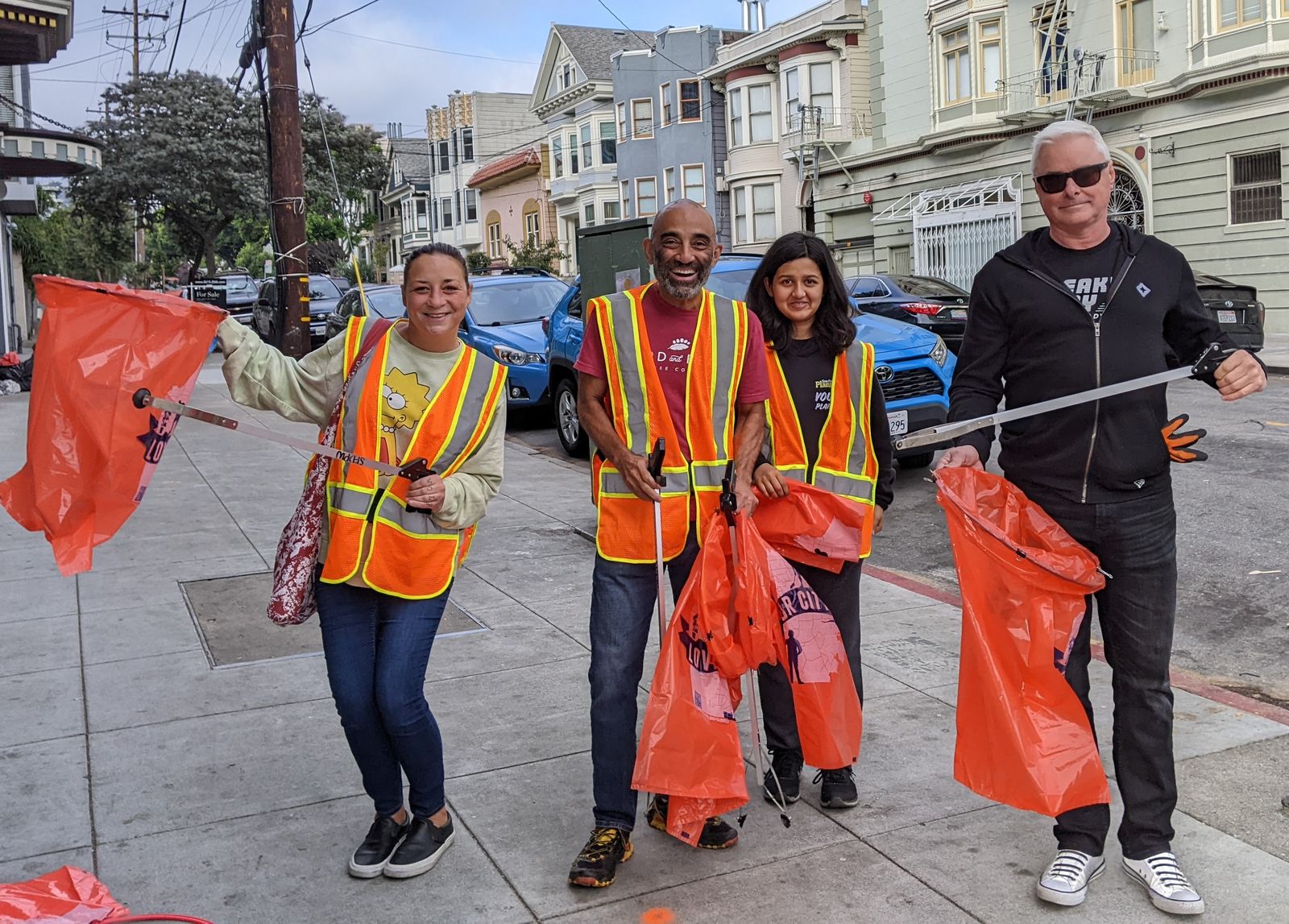
Vince says that organizing a cleanup is fairly straightforward. Someone is designated as a captain. They arrive with gloves, bags, grabbers, and safety vests, give a quick intro, and send folks out in groups. Folks of all ages come to the cleanups, including families with small children.
He gives the same safety warning to everyone who comes: “The street is lava. Don't step out into the street to pick anything up.” Whenever they find needles, sharp glass, or “anything that's a little questionable,” they leave it to the professionals by reporting it to the city's 311 line instead. An hour or two later everyone meets back, ties up the bags, and the city hauls them away.
Then comes what Vince calls the secret sauce that builds community: sticking around. He invites cafes and bakeries to donate coffee and baked goods, and volunteers linger and talk. At the Fillmore South cleanup, “the regulars there have become great friends. They even have a Slack group. They go to baseball games together, they go on hikes, they have a yearly picnic,” he says.
Vince knows volunteering intimidates people, since it can feel like too much of a commitment, especially for those with busy schedules and little free time. But cleanups are casual and easy. “With cleanups, it's like: you check the schedule, find one that fits, show up, and know what to do.” And most important: you get to see the impact immediately. “This block was dirty, and we went in and cleaned it, and now look at it. It's nice for everybody.”
The other thing a cleanup fixes is harder to see. “It can feel like everyone's strangers in the city. We don't really get to know the people around us, even though we're surrounded by people,” he says. He has a term for it: urban anonymity. Cleanups create a space to build connections that eventually turn into the deep relationships that build community. Over the years, he's built many new friendships, younger and older, from all over the city.
Vince figures that if enough people keep showing up, “at some point it'll just be the culture here, and it'll kind of snowball.” He's still chasing that tipping point. “Whatever it gets to, it's already cleaner than it was before.”
Sources
Based on an interview with Vince Yuen, founder of Refuse Refuse, San Francisco. All quotes are his.


 Start your own