Joy had wanted to grow food for years while living in condos and apartments, and once she finally got a yard, she couldn't stop looking at unused land all over her neighborhood. “I'd see an empty lot and lust to put a garden there,” she says. The wartime photo turned that itch into a plan. During the 1940s, Chicago started 1,500 community Victory Gardens and 250,000 home gardens in four years, and 90 percent of those gardeners had never grown anything before. If total beginners could do it then, her neighbors could do it now.
So in April 2010 she organized a community garden on that same lot. “I thought if 20 people wanted to do it that would be cool,” she says. “It ended up being the largest organic food garden in the city at the time.” Half the folks who signed up had never gardened.
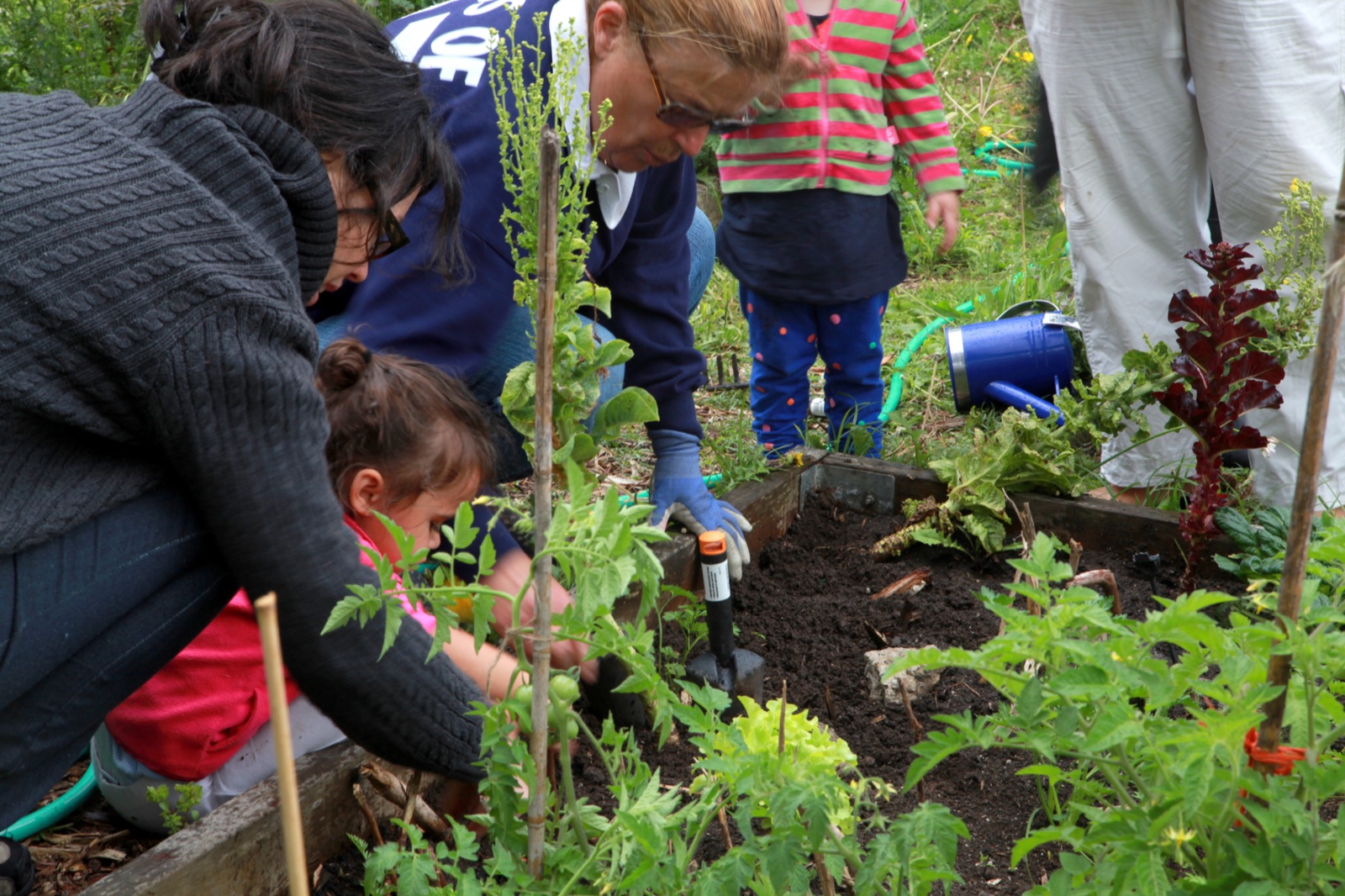
The Peterson Garden Project grew from there, and it grew on borrowed land. Joy knew she could never afford a lot in Chicago, so she made agreements with owners to use empty property for a couple of years, built gardens, and moved on when the land was needed. Her phrase for it: long-term gardeners versus long-term gardens. Within five years the project had built 12 pop-up gardens with 1,200 plots and almost 4,000 people growing food, most of them beginners. Gardeners from that first summer now teach the new ones.
Bobby Wilson, past president of the American Community Gardening Association, likes to say that community gardens are “10 percent garden and 90 percent community.” Joy saw it firsthand: “The parts you can't see are the relationships that form, the communities that come together, the friendships that develop. That's the real miracle.”
Sources
Chicago's Peterson Garden Project – Built for Victory — Teresa O'Connor, Seasonal Wisdom, August 2012.
Q&A: LaManda Joy, Peterson Garden Project, Chicago — UC Food Observer, July 2015.


 Start your own